
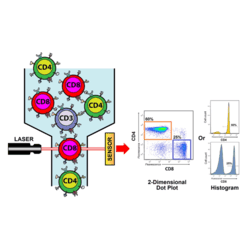
The Lymphocyte Map Test
The Lymphocyte Map Test is a comprehensive blood test designed to assess the distribution and function of lymphocytes in your immune system. It provides a detailed snapshot of the different lymphocyte subtypes and their proportions, helping to identify potential immune imbalances and guide clinical decisions.
What it measures
The test analyzes key lymphocyte populations, including T cells, B cells, and natural killer (NK) cells, along with subpopulations such as CD4+ helper T cells, CD8+ cytotoxic T cells, regulatory T cells, and memory T and B cells. It may also include markers of activation, exhaustion, and proliferation depending on the panel chosen.
Why it’s useful
Understanding the lymphocyte map can aid in diagnosing immune disorders, monitoring autoimmune conditions, evaluating responses to infections, and guiding treatments such as immunotherapies, vaccines, or immune-modulating medications. It provides insights that many standard blood tests cannot offer.
Who should consider it
People with persistent infections, unexplained fatigue, autoimmune symptoms, or a history of immunodeficiency may benefit. It is also useful for patients undergoing cancer treatment, transplant recipients, or those receiving immune-based therapies to monitor immune status.
What to expect during testing
A trained phlebotomist will collect a small blood sample from a vein. The sample is processed in a laboratory using flow cytometry or equivalent techniques to identify and quantify lymphocyte subtypes. Turnaround times vary by lab, but results are typically available within several days.
Interpreting results
Results are reported as percentages and absolute counts of each lymphocyte subset, compared to reference ranges that may be age- and sex-adjusted. A clinician interprets the results in the context of symptoms, medical history, and other tests to determine next steps.
Benefits
• Provides a detailed immune cell profile
• Helps detect immune imbalances early
• Guides personalized treatment decisions
• Aids in monitoring response to therapy
Limitations
Results may be influenced by recent infections, stress, medications, or vaccination history. It is one piece of the larger clinical picture and should be interpreted by a qualified healthcare professional.
Specifications
Sample type: peripheral blood
Test method: flow cytometry-based immunophenotyping (panel-dependent)
Sample requirements: standard venipuncture collection; fasting not required unless specified
Turnaround time: typically 3–7 business days
How to order
Discuss with your healthcare provider to determine if the Lymphocyte Map Test fits your needs. Provide your medical history and current medications to ensure appropriate panel selection and interpretation.
Results delivery
Results are reported to your ordering clinician and may be delivered via secure patient portal or printed report. Your clinician will review the results with you and explain implications and next steps.